

New UK experience-economy research, Tarek Atoui’s sound installation at Tate Modern, a family museum award in Swansea and a flexible science venue in Boston put the value of a visit under the spotlight.
Peter J. Knight
MCP | Creative Labs
There is a useful combination of stories this week. New research gives the UK experience industry a stronger set of numbers to discuss with investors and public bodies. Three very different cultural venues bring the discussion back to the visit itself: what people hear, whether they feel welcome and how a room can support more than one kind of event.
The figures deserve attention. So do the decisions about staff, programming and buildings which sit behind them. For an operator planning a new attraction or renewing an existing one, both belong in the business case.
A clearer measure of the immersive market
Grant Thornton’s Experience Economy Index, launched on 13 October, estimates that UK immersive attractions generated £7.4bn in expenditure in 2025 and contributed £3.9bn in gross value added. Its August survey of 4,000 UK adults found that 31% had attended an immersive experience during the preceding year.
That gives a growing part of the industry something useful to work with. It also needs careful handling. The expenditure estimate includes visitor spending beyond admission, supply-chain activity and spending by employees supported by that activity. The £7.4bn figure is not a tally of ticket sales. GVA is a different measure of economic contribution and should not be added to expenditure to make a larger headline.
The report sets out its survey and modelling approach, including a focus on paid, public-facing experiences with an active or immersive component. That definition matters when comparing its results with a venue’s own market assessment.
Grant Thornton’s announcement, 13 October · Read the index and methodology, page 6
For producers, this is useful context for conversations about investment, local economic benefit and the supply chain. A local authority may reasonably want to understand where visitors eat, how they travel and which suppliers benefit. An attraction still needs its own evidence about demand, achievable prices and operating costs.
I would want those two sets of numbers clearly separated in any proposal. A national estimate can establish that a market deserves serious attention. It cannot tell us how many people will buy a particular experience in a particular town. For an established operator, the useful next step is to compare the research with actual booking patterns and visitor feedback, then look at where the two disagree.
Tate gives sound the room
Tarek Atoui’s Hold opened in Tate Modern’s Turbine Hall on 13 October and runs until 11 April 2027. The Hyundai Commission combines sculptural instruments, wind, percussion and electronics, with microphones sampling sounds from both the installation and the hall. Custom software reworks and plays those sounds back. Live performances will use the installation during its six-month run.
The opening announcement and installation details, 12 October
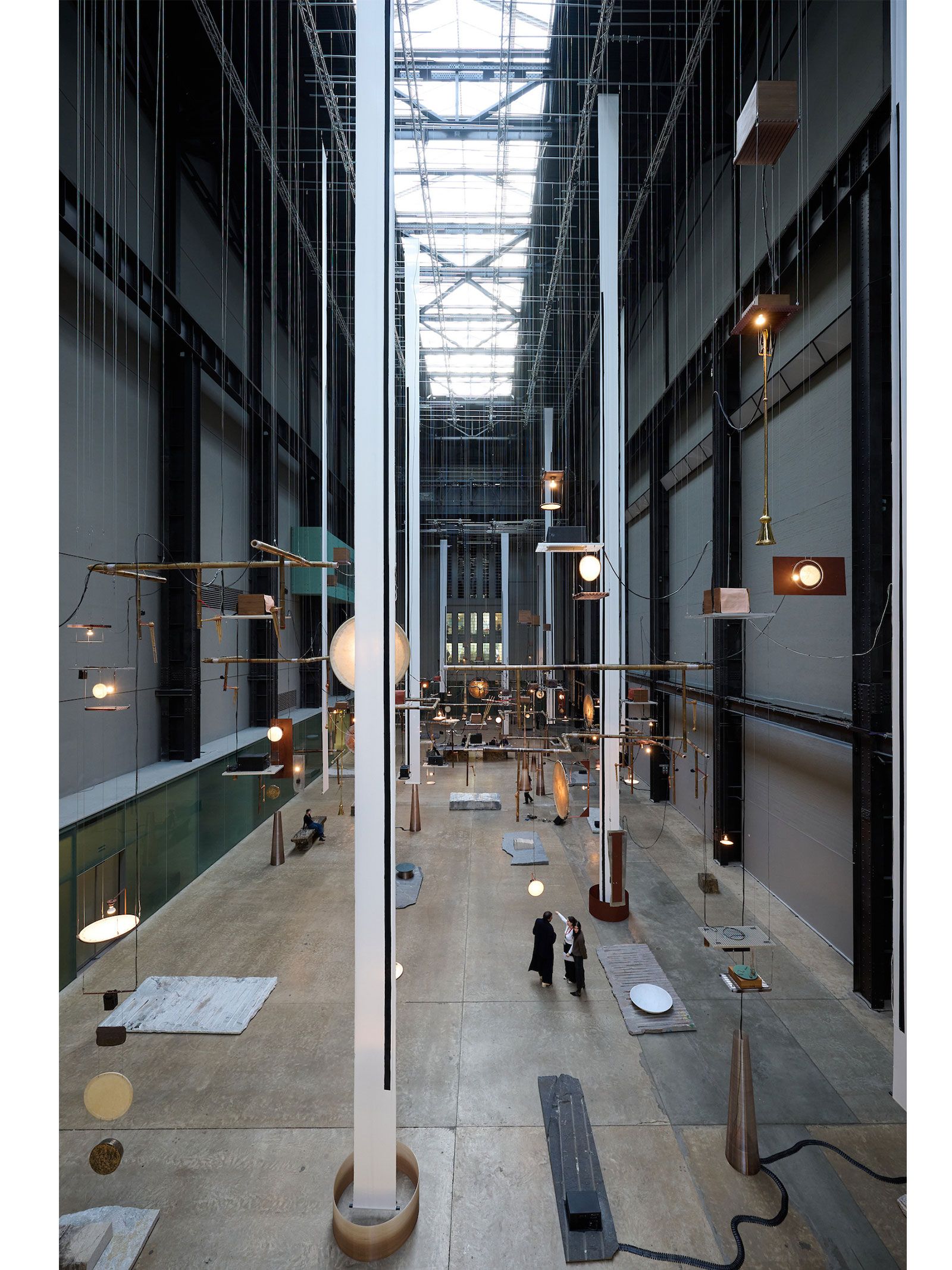
There is a production lesson here for anyone working with sound in public space. The building, the people moving through it and the instruments all contribute to what is heard. The audience does not have to face a single screen or follow a single sequence for the work to have a structure.
For a commissioning team, that raises useful questions early in the brief. How does the work behave when the room is busy? What happens when a live performer joins it? Can staff recognise the difference between intended variation and a fault? Which parts need daily attention, and who has the knowledge to keep them working?
Those are questions to bring to a project team, rather than claims about Tate’s own procedures. A responsive sound work needs an operating plan which understands the artistic intent. Testing only an empty room would leave a large part of that work untested.
The performance programme also gives the installation scope to change over its run. Producers developing long-duration experiences should consider what their systems allow a programmer to do after opening day, and what each change will ask of the people running the space.
Swansea’s award puts the welcome in focus
The Dylan Thomas Centre in Swansea was named overall winner of the Family Friendly Museum Award on 12 October, becoming the first Welsh venue to take the title. It also won the small museum category.
Kids in Museums’ announcement describes a free-entry venue with hands-on activities, sensory resources and staff trained in BSL. Families made undercover visits to the shortlisted museums and helped decide the winners. Their feedback singled out the welcome and the range of things to do together.
The award announcement and family judges’ findings, 12 October
This is a worthwhile story for the wider attractions industry because it concerns the whole visit. A parent trying to keep children of different ages engaged is making a series of small judgements: can we join in, can we take a break, does somebody understand what we need?
It would be easy to read an award like this and produce a shopping list of interactive exhibits. I would start by observing a family’s first few minutes in the building. Do they understand where to go? Are the activities easy to begin? Can an adult participate alongside a child? When someone needs help, is there a person available who can provide it?
The award is qualitative evidence of a successful welcome. It does not establish a financial return or a measured increase in visit length. It does give operators a useful reason to look again at staff time, accessible information and the practical details which allow families to enjoy the content already in front of them.
Boston starts testing a room with several jobs
The Museum of Science in Boston says previews of its William and Charlotte Bloomberg Public Science Common began on 10 October. The museum describes a 10,000 sq ft space with a reconfigurable layout and integrated media and projection systems for presentations, performances and immersive environments.
The preview programme includes robotics demonstrations, a live sound show and activities for younger visitors. This is a new operating phase for a venue announced earlier in the year, rather than a newly revealed project.
The venue and preview status · Current preview programme
For museums considering a comparable investment, the interesting question is how readily a space can move between its intended uses. A room may be capable of a demonstration, a performance and an evening event. The costs emerge in the time between them.
A practical assessment should follow the changeover: where equipment goes, how layouts are recalled, who checks the room and how much rehearsal the next presenter needs. Those requirements belong alongside capacity and image quality when specifying a flexible venue.
The preview period makes Boston worth following as an operating story. It is too early to draw conclusions about utilisation or financial performance from a programme page. What can be seen now is the range of activities the museum is putting into the room. The next useful evidence will concern how that range develops and what it takes to deliver it consistently.
What deserves attention next
For operators and producers, the useful work this week is quite specific. Read the market estimate with its definitions attached. Consider how an installation will behave after months of public use. Watch a family find its way into an activity. Cost the changeover as carefully as the show.
These are manageable questions to take into a project meeting. They also give the industry a more useful account of value, grounded in what a venue can deliver and what a visitor actually experiences.